Machinery & Production
Cheese Machine Prices, Types, and Selection Guide (2026)
Everything you need to know about cheese machine types, capacity selection, stainless steel quality, and price comparison. All the details for choosing the most suitable cheese production machine for your dairy or factory.
Cheese Machine Guide: Selecting the Right Machine Determines Your Business's Future
Whether you're starting a new dairy or expanding your existing facility, the same question will eventually arise: "Which cheese machine is right for me?" Although this question may seem simple, it is actually a decision that directly impacts your operation's capacity, product quality, and production costs for the next 10 years.
In this article, we explain the types of machines used in cheese production, the criteria to consider when making the right choice, and the differences between new and secondhand machines from an industry perspective.
What is a Cheese Machine and What is it Used For?
A cheese machine is food processing equipment that performs operations such as culturing, cutting, heating, draining, pressing, and molding in the process of transforming milk into cheese. From a small dairy to a large-scale food factory, these machines form the backbone of hygienic and standardized production in every operation.
There is not just one "cheese machine," but dozens of machine types specially designed for different stages of the production line. To choose the right machine, you must first clarify which step of the process you need.
Primary Machine Types Used in Cheese Production Process
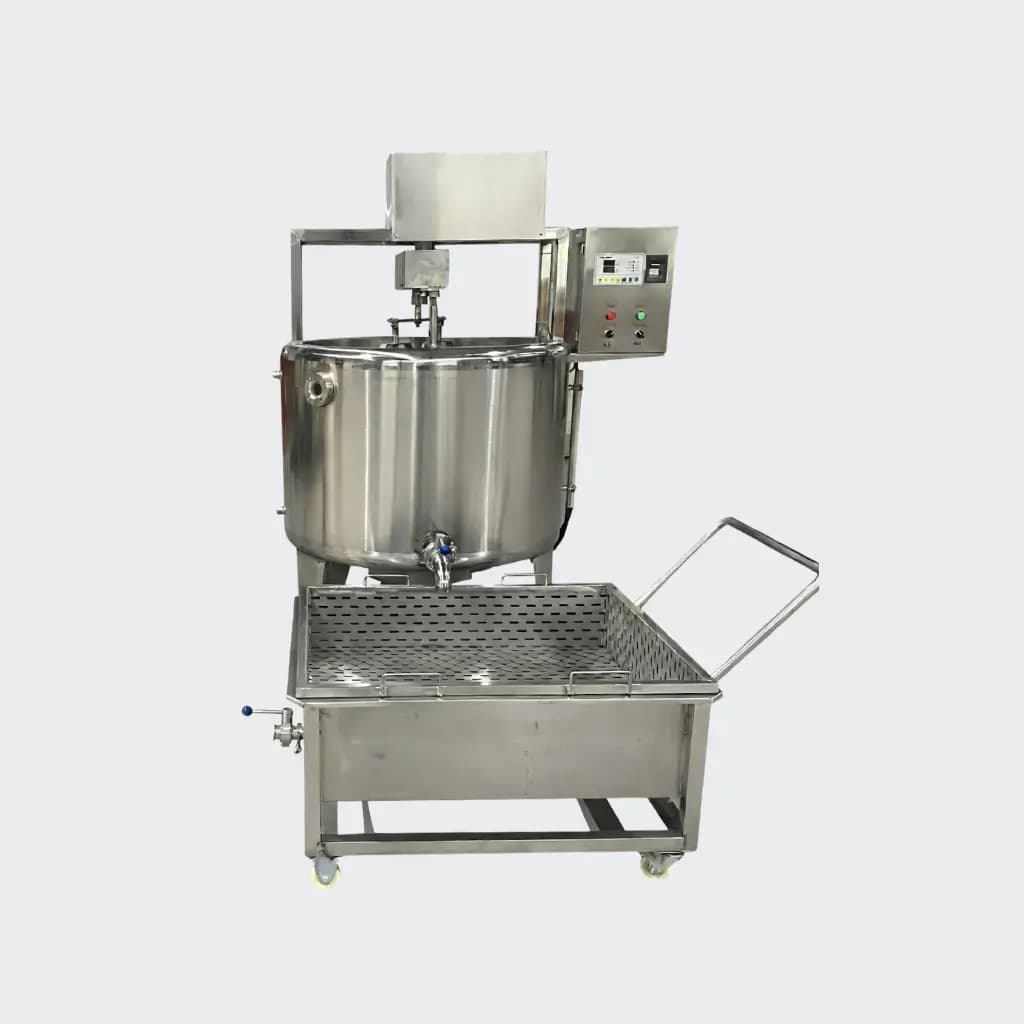
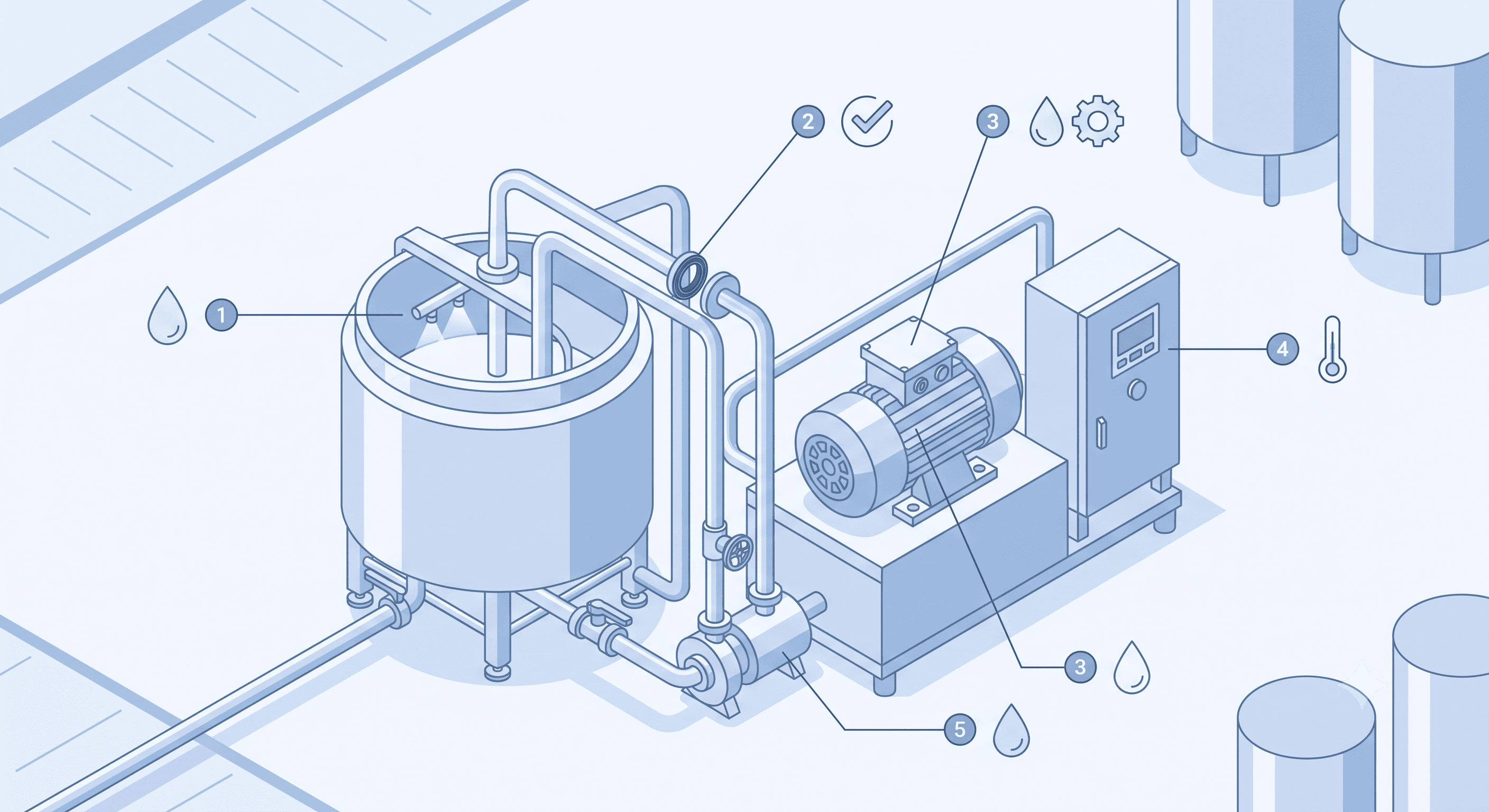
1. Pasteurization and Heating Tanks
Milk is made hygienic and brought to the required temperature for culturing in these tanks. They are made from stainless steel and feature precise temperature control systems.
2. Culturing and Cutting Vats
Cultured milk is converted into curds here and separated from whey. These vats, sized according to capacity, are among the most critical points in the production line.
3. Cooking and Kneading Machines
Used especially in the production of "kneaded" cheeses such as Kashar and mozzarella. The cheese mass is processed in hot water or brine to become flexible and moldable.
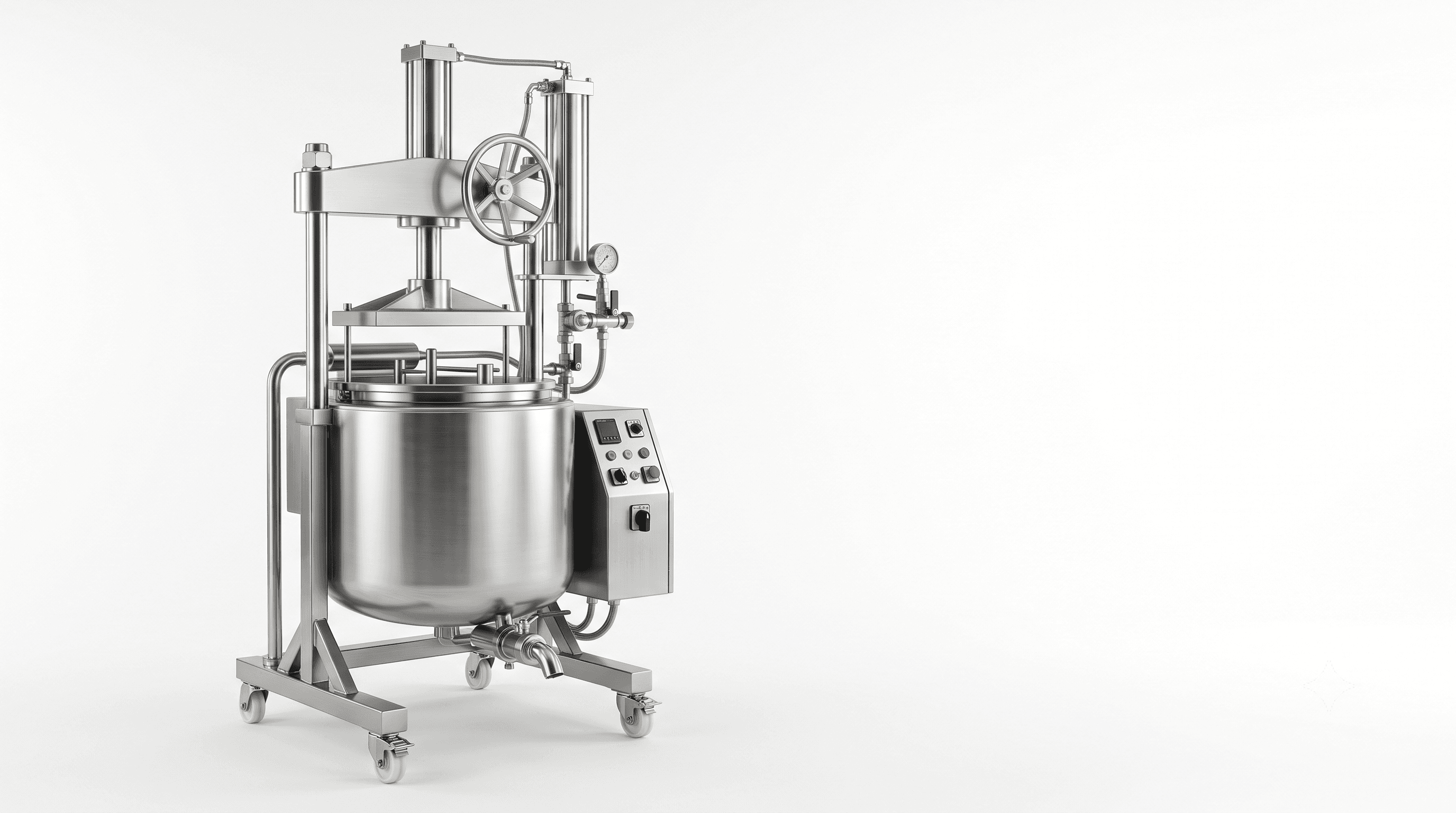
4. Cheese Press Machines
Pressed cheese loses excess whey, reaching the desired consistency and shape. As automation level increases, labor requirements decrease.
5. Maturation and Cooling Cabinets
The section where pressed cheese is controlled and matured in specific temperature and humidity conditions. In matured cheese types like Kashar, this stage directly determines product quality.
6. Slicing, Cutting, and Grating Machines
Enables finished cheese to be brought to a consumer-ready state. It holds particular importance for restaurants, supermarkets, and food service establishments.
What Should You Consider When Choosing the Right Cheese Machine?
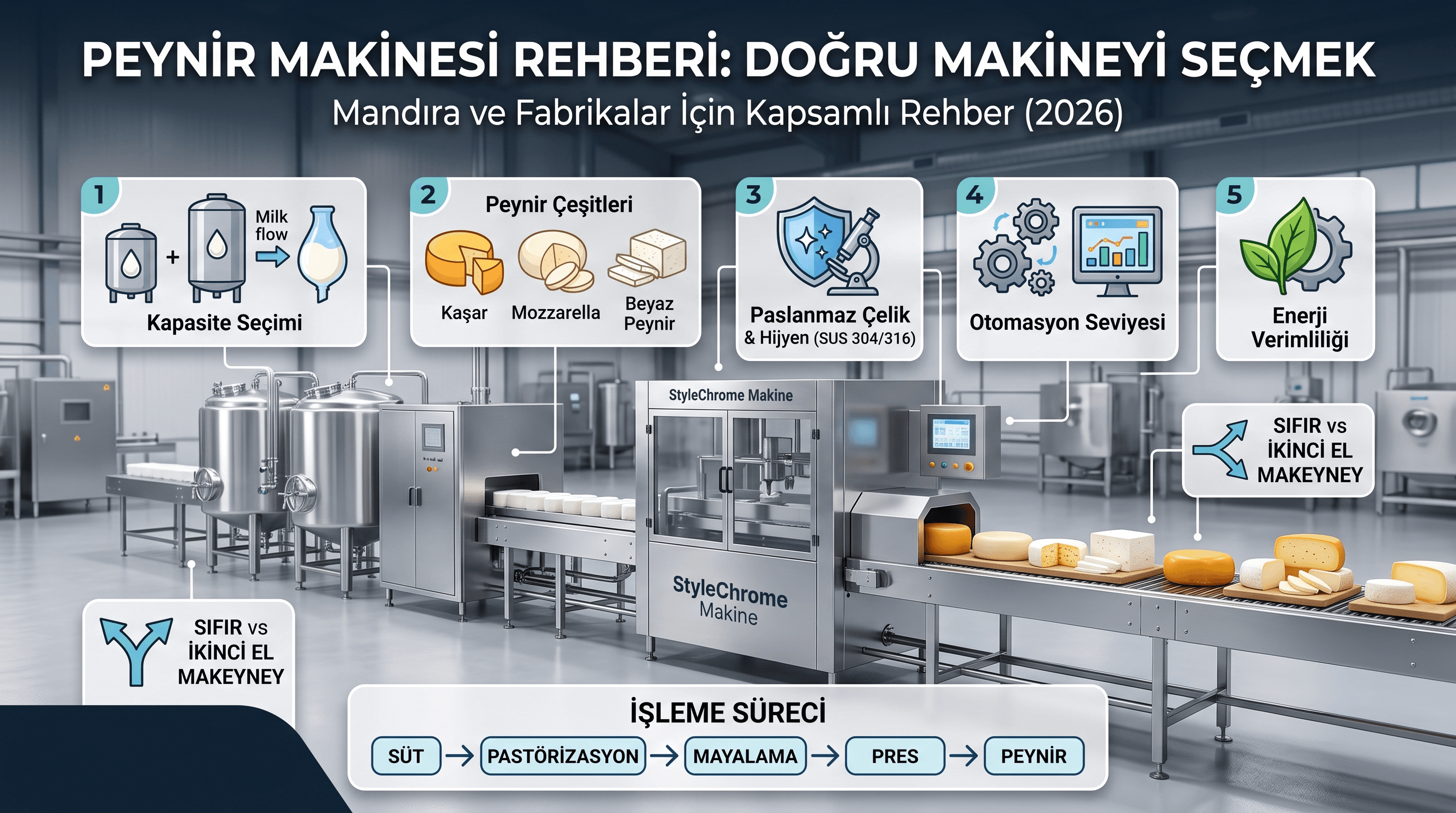
Before making a cheese machine investment, you must evaluate these five criteria:
Production Capacity: The amount of milk/cheese you plan to process per hour or day determines the machine's size and motor power. A machine purchased for a small dairy can quickly become inadequate if you have growth objectives.
Cheese Type to be Produced: Not every machine can produce every cheese type. Different types such as white cheese, Kashar, whey cheese, and string cheese require different equipment. First, decide which products you will produce.
Stainless Steel Quality and Hygiene: All surfaces in contact with food must be stainless steel. The quality of the steel and welding workmanship determine both the machine's lifespan and cleanability. While machines made with inexpensive materials may appear attractive in the short term, they create risks of malfunction and hygiene issues in the long run.
Energy Efficiency: The insulation of tanks and boilers requiring heating-cooling and motor efficiency directly affect your operational costs.
Automation Level: Manual, semi-automatic, and fully automatic options are available. As automation increases, human error and labor requirements decrease, but initial investment costs rise. The right balance here depends on your operation's scale.
New or Secondhand Cheese Machine?
Secondhand machines may be more affordable and offer faster delivery. However, the previous usage history cannot be fully known, worn parts may be present, and warranty period may have expired. If a secondhand machine is to be purchased, physical inspection must be done, trial production must be attempted, and work must be done with reliable sellers.
With new machines, the initial cost is higher, but warranty, service support, project-specific design possibilities, and long-term efficiency advantages are provided. Especially for operations with special capacity or special cheese type requirements, new and project-specific production is often a more logical investment.
Cheese Machine is Not a Product, but an Investment Decision
Purchasing a cheese machine is a comprehensive process requiring technical consulting, assembly, commissioning, and service support. Working with a supplier that not only sells products but can provide production process consulting, project design, and is reliable in warranty and spare parts matters directly impacts the return on your investment.
Why StyleChrome Machine?
As StyleChrome Machine, we do not sell machines from standard catalogs. We produce specialized cheese processing machines that other manufacturers cannot make—more challenging and customized ones—while offering competitive prices and delivery speed above industry average.
Specialization: We are not a standard cheese line manufacturer, but your project-specific solution partner.
Difficult projects are our business: We bring to life projects you thought "no one can do this" in terms of capacity, materials, or design.
Competitive pricing: We properly scale your investment without compromising quality.
Fast delivery: We have structured our production processes to reduce industry waiting times.
Whether you're making your first investment for your dairy or expanding your existing line, you can contact us for cheese processing machine solutions tailored to your needs.
Frequently Asked Questions
What determines cheese machine prices?
Capacity, automation level, stainless steel quality used, and whether the machine requires custom design directly affect the price. There can be significant price differences between a standard machine and a custom-designed line.
Which machines are sufficient for a small-scale dairy?
Generally, a compact line consisting of a culturing vat, cooking-kneading unit, and press machine is sufficient for small-scale production. As capacity increases, additional units such as pasteurization tanks and maturation cabinets come into play.
Is it risky to buy a secondhand cheese machine?
Secondhand machines purchased without proper inspection are risky. Physical examination, trial production, and selecting a reliable seller greatly reduce this risk.
Is a standard machine sufficient for a special/different cheese type?
Generally, no. Each cheese variety (white cheese, Kashar, mozzarella, whey cheese, etc.) requires different processing steps. For this reason, project-specific machine design typically yields more efficient results for most operations.